
When two very different versions of you seem to exist
One of the most confusing things about complex trauma is the contradiction it can create.
You can be capable, organised, perceptive and responsible. You may be the person everybody turns to in a crisis. You can manage work, care for other people, solve problems, anticipate what needs doing and hold everything together.
And then something happens.
A message goes unanswered. Somebody sounds disappointed. You feel criticised, excluded or uncertain. A relationship shifts. You make a mistake.
And suddenly the part of you that can handle almost anything seems to disappear.
You may feel panicked, ashamed, desperate for reassurance, furious, frozen, abandoned or completely overwhelmed.
Then another part of you looks at that reaction and says, “What on earth is wrong with me? I am an adult. I should know better than this.”
That gap — between the highly capable adult and the part that can feel painfully young — is one of the paradoxes we can see in complex trauma.
It is not proof that you are immature.
Very often, it tells us something about how you had to develop.
Growing up too quickly and not having room to grow
Healthy development is not simply about getting older. It happens through relationship.
A child gradually learns that somebody will come when they cry. That feelings can be felt without becoming dangerous. That mistakes do not threaten belonging. That needs can be expressed. That conflict can be repaired. That they are allowed to explore, play, fail, depend on somebody and slowly become more independent.
But when childhood is shaped by fear, emotional unpredictability, neglect, criticism, addiction, conflict, loss or other forms of chronic stress, development can become uneven.
Some capacities may have to develop far too early.
You learn to read the room. You notice tiny changes in somebody’s mood. You become responsible. Independent. Useful. Quiet. High-achieving. Emotionally self-contained.
Those abilities can become very sophisticated.
At the same time, other parts of development may receive far less support.
There may not have been enough safety to learn how to ask for help, tolerate disappointment, trust somebody consistently, express anger without losing connection, make mistakes without shame, or know that your needs matter too.
So you can arrive in adulthood with genuine maturity in some areas and enormous vulnerability in others.
Both are real.
The very mature part may also be a survival part
We tend to admire the competent side of a traumatised person.
The one who never needs anything.
The one who is dependable.
The one who keeps going.
The one who understands everybody else.
The one who can cope with extraordinary amounts of pressure.
And of course those qualities can be strengths.
But sometimes they were also built in an environment where not coping did not feel like an option.
Hyper-independence can look like confidence while carrying a deep expectation that nobody will reliably be there.
Being exceptionally tuned in to other people can look like emotional intelligence while also containing hypervigilance.
Being the calm, sensible one can be genuine maturity — and a role learnt because the adults around you could not safely hold the situation.
This is why healing is not about taking your competence away.
It is about asking whether you still need to work quite so hard to be safe.
Why the younger part can appear so quickly
Trauma responses are often faster than conscious thought.
A present-day situation can touch an older fear before the adult mind has had time to put the situation into perspective.
That is why a relatively ordinary event can sometimes carry enormous emotional weight.
The unanswered message is not only an unanswered message.
It can touch the old experience of being forgotten.
The criticism is not only feedback.
It can touch the place that learnt mistakes meant shame, rejection or danger.
Somebody needing space is not automatically abandonment.
But a nervous system shaped by inconsistent closeness may respond before the thinking mind has worked that out.
In those moments, the reaction can feel younger because the protective pattern was learnt when you were younger.
That does not mean you have become a child.
It means an old state has become active.
The shame after the reaction can make everything worse
For many people, the reaction itself is only half of the pain.
The second layer is the shame that follows.
“Why am I like this?”
“I should have grown out of this.”
“I can manage everything else. Why can’t I manage this?”
This is where the contrast between the mature part and the vulnerable part can become cruel.
The competent adult tries to manage the younger, frightened part in exactly the way that frightened part may already have been managed in childhood: by criticising it, silencing it, demanding that it stop being difficult, or insisting that it should need less.
And the internal split becomes even stronger.
The part that is frightened does not usually need humiliation.
It needs understanding, boundaries, regulation, reality and a different experience of relationship.
Relationships often reveal the split
You may be completely competent at work and feel destabilised in love.
You may care beautifully for other people and struggle to receive care yourself.
You may be decisive in a crisis and find it almost impossible to say what you need in an intimate relationship.
You may appear independent while feeling intensely affected by distance, silence or perceived rejection.
This makes sense when we remember that our earliest development happened in relationship.
Closeness can activate material that achievement does not.
A spreadsheet cannot abandon you.
A work deadline does not ask you to expose your deepest need for connection.
But intimacy can.
This is one reason somebody can look extraordinarily mature from the outside while privately feeling ashamed of reactions they do not understand.
A systemic view asks what role you had to take
Family Constellations adds another question to this picture.
Not only, “What happened to me?” but also, “What role did I learn to take in the family system?”
Were you the capable one?
The peacemaker?
The child who looked after a parent?
The one who did not cause trouble?
The one who became successful?
The one who carried everybody’s emotions?
Sometimes the highly mature part belongs to a role that helped the family system function.
And sometimes the more vulnerable part contains the needs that had nowhere safe to go.
This does not mean every adult difficulty is caused by the family system, and it is important not to force a neat explanation onto somebody’s life.
But when the same role keeps repeating — in relationships, work, friendships or the way you treat yourself — it can be powerful to look at the wider context.
Healing is not making one part defeat the other
The goal is not to get rid of the younger part so that the competent adult can finally take over completely.
And it is not to reject the strong, capable part as though it was somehow false.
Both developed for reasons.
Integration means the adult self gradually has more choice.
You can notice that an old fear has been activated without allowing it to decide everything.
You can need reassurance without making another person entirely responsible for your safety.
You can be strong without never needing support.
You can set a boundary without becoming hard.
You can feel younger feelings while staying connected to the reality of the present.
That kind of change usually happens through repeated experiences of safety, self-awareness, regulation, compassionate accountability and healthier relationship — not simply by telling yourself to grow up.
You were not meant to become less human in order to survive
For me, one of the most important shifts in trauma work is moving away from the question, “Why am I so contradictory?”
The contradiction often makes much more sense when we understand adaptation.
A child can become incredibly capable because life required it.
The same child can carry needs, fear, grief and vulnerability that never had enough room to develop safely.
The adult may then contain both.
In my therapeutic and systemic work, I am interested in helping those different parts of experience come back into relationship with each other — without shame, without reducing somebody to a diagnosis, and without pretending every reaction has one simple cause.
The aim is not to become less sensitive.
It is not to become less capable.
It is to stop needing one part of you to do all the surviving while another part holds all the pain.
And when those parts no longer have to fight each other quite so hard, adulthood can begin to feel less like performing competence and more like actually having choice.
A gentle note
If symptoms of trauma or CPTSD are severe, frightening, or significantly affecting day-to-day life, appropriate medical or mental-health support is important. Family Constellations and other therapeutic approaches can form part of reflective or therapeutic work, but they should not be treated as a substitute for necessary clinical care.
These articles are for general understanding, rather than individual therapeutic advice.
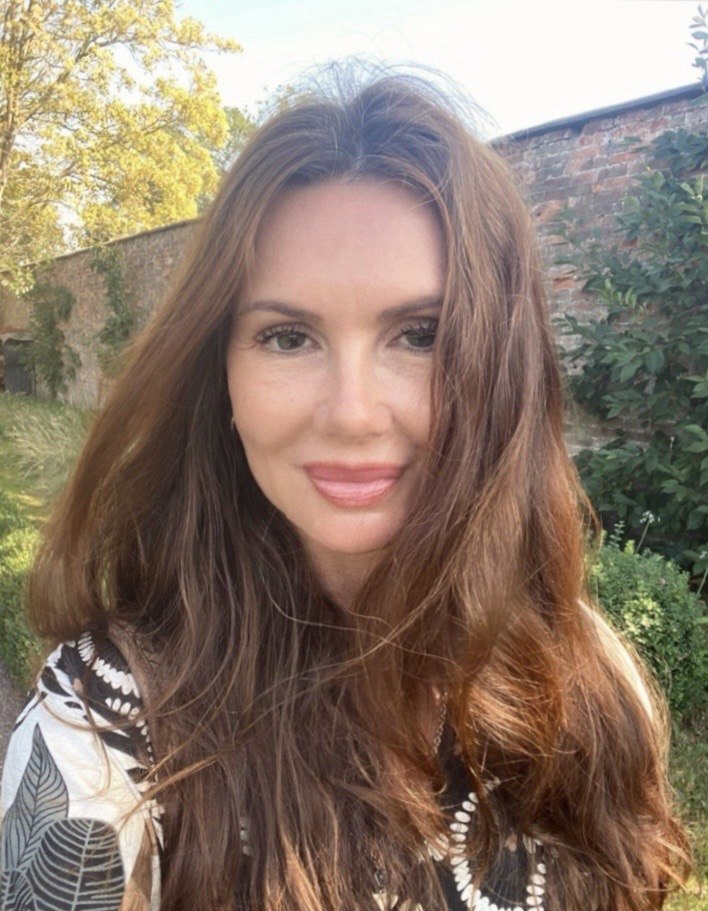
ABOUT LISA
Psychological understanding.
Human connection.
Lisa’s practice brings together Family and Systemic Constellations, therapy and hypnotherapy, with room for spiritual awareness where it is meaningful to you.
Meet Lisa